I. Share general background of Cambodia.
Show Cambodia on map.
Discuss the climate and ask, "What would you wear there?"
Discuss why pine trees don't grow there.
II. Introduce sugar palm trees.
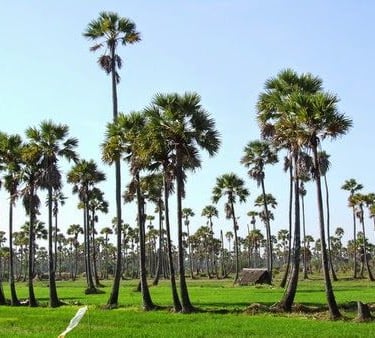
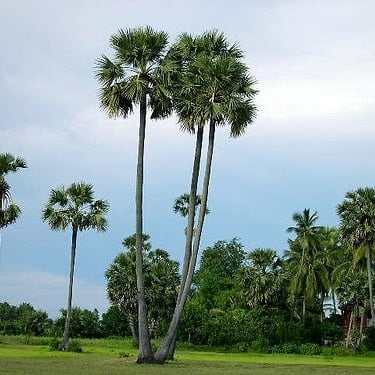
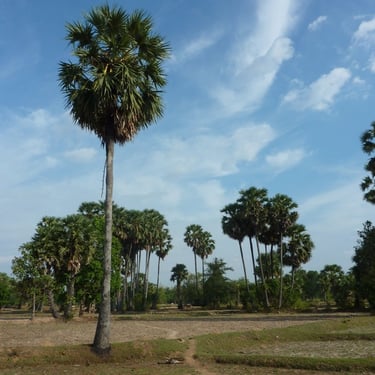
Show pictures of the tree.
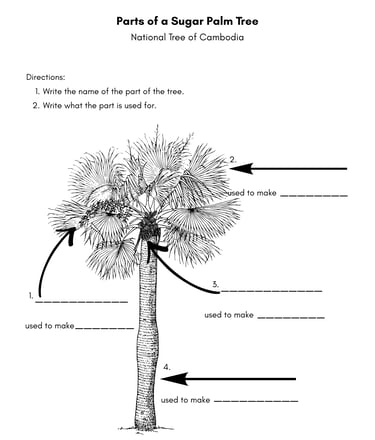
Discuss the parts of the tree and what each part is used for.
a. trunk - show picture of brown bowls.
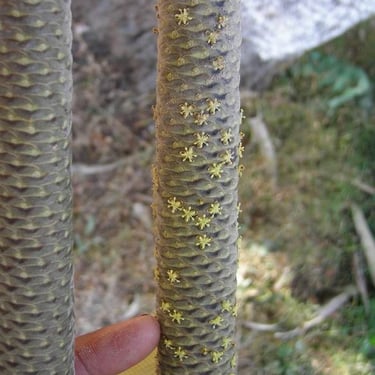
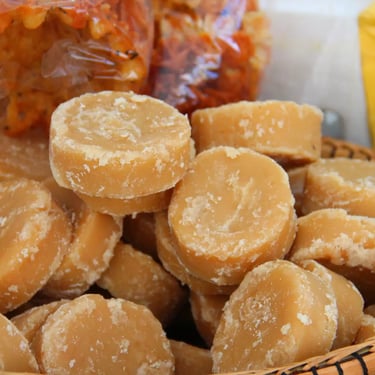
b. flowers - show picture of green "tubes" with yellow blooms. Show picture of brown sugar discs.
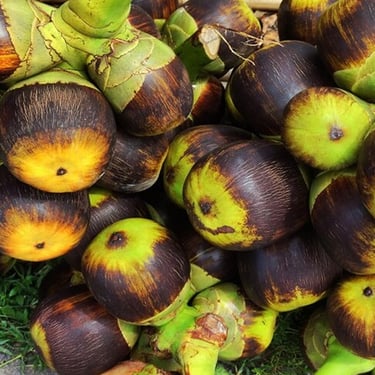
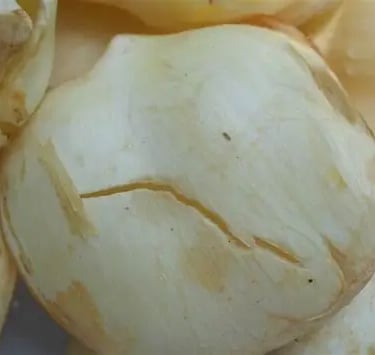
c. fruits - show picture of dark brown fruits. Bring in a softball for size comparison. Show picture of white flesh.
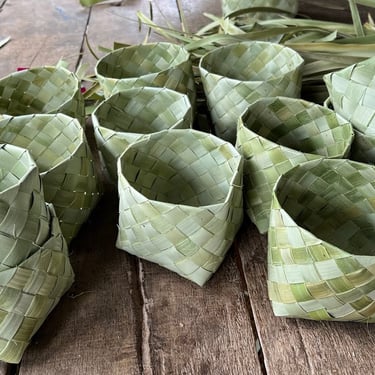
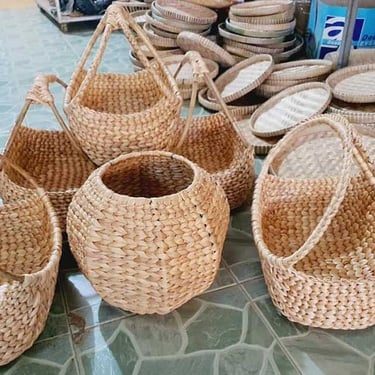
d. fronds - show pictures of green and brown baskets.
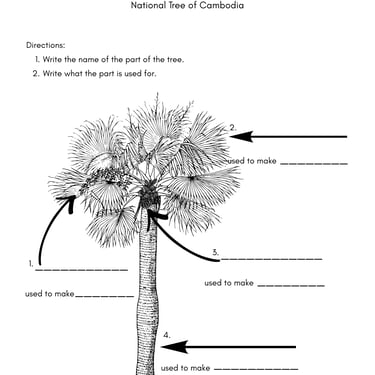
III. Complete handout.
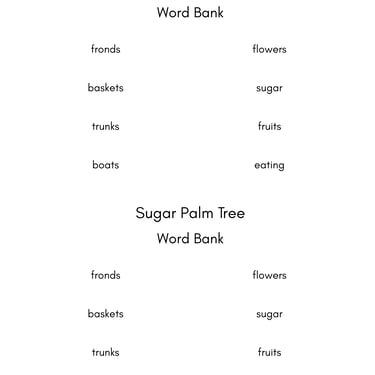
For preschool: give each child a word bank. Have them cut out words and glue them on the worksheet.
For kindergarten: give each child a word bank. Have them write words on the worksheet.
IV. Weaving craft
Kids can practice simple weaving using construction paper. Go here for instructions.
Background
Lesson
Sugar palm trees are the national tree of Cambodia. They can grow anywhere in the country, but on our trip there, my daughters and I saw them mostly on the outskirts of rice paddies and other farmlands.
The flowers from these trees secrete sap that is boiled down and turned into sugar. Other times, the sap is fermented and turned into alcohol. (I remember hearing stories about men climbing up the trees that they had been working on and falling asleep up there because they were too drunk to climb back down.) Each fruit is about the size of a soft ball, with a dark brown skin. Inside, the flesh has a soft and white texture with a light sweet flavor.
Other parts of the sugar palm tree are equally important. The fronds are woven into useful items for the home. People weave large circular trays and mats, purses and hats, thatches for roofs, and even contraptions for catching fish. Oftentimes, tourists buy woven baskets as souvenirs. Lastly, the trunk of sugar palm trees is used to make boats, bowls, and cutlery.
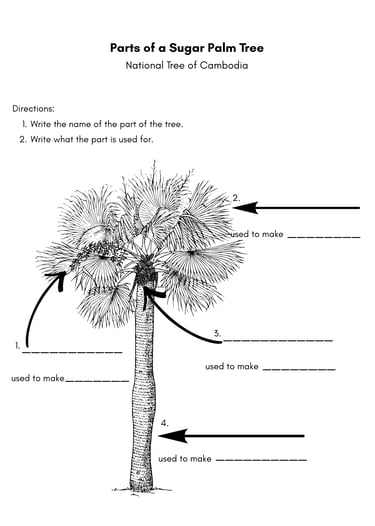
sugar palm trees and their uses